
Nutrition – where will a student be taught the truth?
I’ve had so many queries from people about studying nutrition that this blog is probably long overdue.
Nutrition is a fascinating topic. There is little more important to human health than what and how we eat. Modern epidemics of obesity and ill health are capturing media headlines and the attention of curious minds alike. This is a subject about which many people want to know more. However…
When I am asked to recommend a course on nutrition I can’t. I am not aware of a single programme being offered anywhere in the world, which is evidence based and which presents facts, rather than the current myths presented as facts. That doesn’t mean that there isn’t one, but I don’t know of one and I would be surprised if there were one given the extent of the misinformation being perpetuated by the vast majority of people working in this field.
What do you want to learn?
My starting advice to someone interested in studying nutrition would be to be specific about what you want to know. The British Dietetic Association curriculum for training as a dietician is detailed here. If this is your first higher qualification, the background in basic sciences and biology may be useful to you. For those who already have a degree and/or studied science to a reasonable level at school, reading a cell biology, physiology and biochemistry textbook will deliver the required background.
My passion is obesity. There is more than enough to study on this topic to do nothing else for the rest of one’s life. Hence I am not interested in (using the attached curriculum by way of example) immunology, microbiology, (food hygiene), clinical medicine, pharmacology, sociology and social policy, communication and educational methods and definitely not interested in ‘food’ science. Nature provides food – that’s the only food I want to understand. I’m not particularly interested in dietetics for the prevention of general disease (besides the fact that eating real food will achieve this naturally) and I’m only interested in public health to the extent of how we managed to get ourselves in the midst of an obesity epidemic.
Becoming a dietician
When I set out to study nutrition more formally, I investigated training as a dietitian. I rejected the prospect very quickly on two grounds:
i) With 1.5 billion overweight people in the world, this is more than a big enough arena in which to specialise. As detailed above, I have no interest in the vast majority of the dietician curriculum and have no time to ‘waste’ on such topics when I could be spending that time reading obesity journals.
ii) Upon investigation of the weight management part of the course, I discovered that the first lesson is the calorie formula. I would be told that energy in equalled energy out and that to lose one pound of fat a deficit of 3,500 calories must be created.
Thus the one part of the course that I would be interested in, would be of no use to me. Presumably I would need to reproduce answers that I know not to be true to pass, or fail as a result of giving my honest answer. A quick analysis of the 58 page curriculum document confirms that I made the right decision: the word weight does not appear once; the word obesity does not appear once; the word calorie does not appear once and the word diet only appears six times and in a very general context of the word diet e.g. UK diet or diet and lifestyle.
A third reason became apparent when I was researching for my book The Obesity Epidemic: What caused it? How can we stop it? Conflict of interest…
Here are the sponsors of The American Dietetic Association. Here are the program partners of the Dieticians Association of Australia. Here are the major partners of the Dieticians Association of Australia. Here are the associate partners. I detail in my book, The Obesity Epidemic, how unwilling the British Dietetic Association is to disclose its conflicts of interest. After a number of email exchanges, a BDA spokeswoman confirmed “we have been delighted to work with the Sugar Bureau…” The chief executive’s foreword (Andy Burman) in the 2008-09 annual report of the BDA notes “We now have our first national partners with Danone and Abbott and we hope to announce new partners over the coming year or so.” There is reference to a “Bird’s Eye” education award, but no mention of other partners or sponsors. The accounts for 2009 showed a turnover of £2,359,013 with no details of the source for this revenue. The notes to the accounts, which could add detail to this number, are for the eyes of BDA members only. A press release, dated 1 March 2007 entitled Kellogg’s: commitment to health and wellbeing, informed me that Kellogg’s had been the lead sponsor for the British Dietetic Association’s annual obesity intervention campaign since 2002 (and may still be).
Here are the members of the British Nutrition Foundation. Here are the sustaining members of the British Nutrition Foundation.
It is a complete disgrace that our nutritional ‘education’ has been infiltrated in this way. The partner that most disturbs me is Abbott Nutrition. This company makes an infant formula called Similac. The feeding guidelines on the Similac web site range from 1-2 weeks to 9-12 months, so this is clearly a product designed for babies. The can of baby formula, of the part that is not water, contained 43% corn syrup solids and 10.3% sucrose. “It’s a baby milkshake,” said a horrified Robert Lustig in the video “Sugar: The Bitter Truth“. I wanted to analyse a product for myself, so I chose Similac Isomil Advance, Soy Formula and the composition of this was 50% corn syrup, 14.2% soy protein isolate, 10.4% high oleic safflower oil, 9.7% sucrose, 8.2% soy oil and 7.5% coconut oil. If a baby is unfortunate enough not to be breastfed, the infant can be started on a diet of 60% sugar from the first moment something is put in its mouth.
It is clearly in the interests of ‘food’ companies to partner with those giving us dietary advice – and to start as close to birth as possible. Does the public know that our advice is so conflicted? How can we “Trust a dietician to know about nutrition” (their slogan) when this conflict of interest exists?
Nutritional ‘education’
That’s the conflict inherent in our nutritional training, what about the content of programmes?
I only know one way to learn and that is to “get the facts”. I am a thinker, not a feeler. If I am told something I need it to be evidence based. I want to know the source of everything – where did that come from? when did this become known and so on. This stood me in good stead studying economics (maths, statistics options) at Cambridge. Applying the same rigour to the subject of nutrition was the most shocking thing I have ever done.
During the three years of full time research for The Obesity Epidemic, the following nutritional beliefs did not hold up to scrutiny. Please note – these points are only in the part of nutrition related to dietary advice and weight loss. There may be many more errors in the teaching of nutrition outside my areas of interest.
Starting at the very beginning – dieticians state that “energy in = energy out.” “You can’t change the laws of the universe”, they say. But there is no law of the universe that says “energy in = energy out.” I detail in The Obesity Epidemic exactly what the laws of thermodynamics say and which law we have misunderstood and which law we have ignored.
We are then told that 1lb = 3,500 calories. It doesn’t.
We are told that we will lose 1lb if we create a deficit of 3,500 calories. We won’t.
We are told that 98% of diets fail (true for calorie deficit diets) but are continually told to “eat less/do more” despite this.
Five-a-day is a marketing myth. Eight-a-day (drinking) is similarly fabricated. Alcohol guidelines are numbers “picked from the air.”Fruit is essentially sugar (fructose/glucose – aka sucrose) with vitamin C and not much else by way of nutrition. Offal, red meat and butter, the foods most often condemned by diet advisors, are nutritionally exemplary.
Saturated fat is life vital. Mother Nature is not trying to kill us.Cholesterol is life vital. Our own body (which makes our cholesterol) is not trying to kill us. The formula for cholesterol is C27H46O. There is no good or bad version.Grazing (don’t); fibre (pointless); sedentary behaviour (how humans were designed to be) – there’s so much that we have got terribly wrong.
As Kaayla Daniel said at the 2011 Weston Price Conference – “If you’re told it’s bad, it’s good and if you’re told it’s good, it’s bad – work on that basis and you can’t go far wrong!”
Check out this free ebook or any of these presentations: Calories, Energy Balance, Thermodynamics and Weight Loss; Ten diet myths; The Obesity Epidemic to find out more.
Conclusion
I cannot recommend any dietetic or nutrition course because I know of none that will teach the truth about everything from thermodynamics to the role of insulin in fat storage. My genuine recommendation is that you need to study via amazon (Sean Croxton, Underground Wellness, concluded the same) and medical journal web sites.
Read Mary Enig and Sally Fallon Morell on fats; Uffe Ravnskov, Duane Graveline and Dr Malcolm Kendrick on cholesterol and the lipid hypothesis; The Diet Delusion (Gary Taubes); critical reviews of all of these and weigh the evidence for yourself. There will be many more non- conventional wisdom works for different areas of interest. The seminal journals to be read include Benedict (1917); Newburgh & Johnson (1930); Hugo Rony (1940); The Minnesota Starvation Experiment/The Biology of Human Starvation (1950); Stunkard & McLaren-Hume (1959). The Seven Countries Study (1970); The COMA report (1984). There are 400 references here for convenience – the books and journal articles are recommended.
When I started to question the origin of the calorie theory (1lb = 3,500 calories, so to lose 1lb you need to create a deficit of 3,500 calories), I asked the Department of Health, the National Health Service, the National Obesity Forum, The National Institute for Clinical Excellence, the Association for the Study of Obesity, Dieticians in Obesity Management and the British Dietetic Association. None could source the calorie theory. None could prove it.
The British Dietetic Association reply was: “Unfortunately we do not hold information on the topic that you have requested.” It was suggested that I contact a dietitian. I happened to be with several dietitians at an obesity conference later that month (June 2009), so I asked fellow delegates and no one knew where the 3,500 formula came from. No one knew where the ‘eatwell’ plate proportions came from. One dietitian said to me “You’ve made us think how much we were just ‘told’ during our training, with no explanation. A group of us over there don’t even know where the five-a-day comes from.”
I rest my case!


Hi Zoe,
I am going to that Globesity conference (for CPD) so shall look forward to hearing your talk.
Keep up the great work that you are doing. Best wishes, Kate
Fab! Please come and say hi :-)
I did the diploma at the Instititute for Optimum Nutrition (www.ion.ac.uk) and believe that this is the best evidence based training course for people wishing to gain some nutrition knowledge and in so doing become nutritional therapists. The college was started by Patrick Holford and I believe he shares many of your views Zoe. Your views and research are definitely held by all the nutritional therapists I know.
Hi Kate – many thanks for sharing this. I’m speaking at an ION conference in July so it will be lovely to meet some people who don’t think fat and cholesterol are trying to kill them!
Very best wishes – Zoe
What about the information provided by Gary Taubes or yourself which is often based on pseudo-science & junk science?
Cherry picking data, and out of date data at that to support your ideas.
I agree with some of your information that you put out there, but some of the stuff is borderline scare mongering.
Hi Zoe, I am currently in my 3rd year studying BSc nutrition and exercise sciences at UCLan. It has taken me until my 3rd year to finally realise the truth of nutrition from reading evidence based books from fantastic authors. Most of my assignments I hand in now I fear for as they are controversial and very much against the grain (excuse the pun) of what we are tought. However, my lecturers have been great in not marking me down for this and accept the fact my points are backed up with solid referencing. I practise what I preach now too and have cut from 11%body fat to around 9% and am doing far less exercise a week. I now believe what I know and preach now about nutrition is the best advise I can give.
Hi Chris – many thanks for sharing this – it will be really encouraging to other prospective students who want to study thus great topic but want to stay true to evidence!
Best wishes – Zoe
In the context of BDA sponsorship, I’ve had a look at the BDA Annual Report 2012-2013.
It seems that, of the £2.4m income, only £1.7m can be taken as BDA member subscriptions. This leaves £0.7m, thats about £700,000 of income from ‘other sources’. In the absence of clarification from the BDA, its reasonable to assume that the bulk of this is from corporate sponsorship. Is it not?
With this in mind, It might be worth asking them again!
FYA, this BDA member subscriptions figure of £1.7m is calculated by taking the BDA membership role numbers, as published in the report, and multiplying by the appropriate member subscription, as published on the BDA website.
Best etc’s
Chris
My name is Deborah Krueger, I am 65 years old, and I live in Portland, OR.
I am the person who had the Julian Bakery Smart Carb#1 bread tested through a food testing laboratory.
They had been stating 12g protein, 13g carbs, 12g fiber, and 1g net carb per slice. Testing showed 6g protein, 23g carbs, 6g fiber and 17g net carb per slice. So all you people who have been eating this bread have been duped for years. and as for you diabetics-you have been poisoned day by day, slice by slice, for as many years as you have eaten this bread, or any of the other Julian Bakery breads for that matter. And you people looking to lead a low-carb lifestyle, well guess what; you have not been if you were eating any of the Julian Bakery breads.
Heath Squier and Julian Bakery have literally been lying for years on all of their nutritional food facts labels. All one need do is read the list of ingredients.
A couple of their breads have changed because I filed a complaint with the FDA on July 30th, 2012. Their bad reviews started shortly after this time. They have only changed the three breads I had tested. Go figure. And now, the products they are producing don’t seem to be too good these days. I wonder why. Maybe it’s because you really can’t have your cake and eat it too.
We all need to be able to believe and rely on any nutritional food facts label. Companies are on their honor to produce a true label for their products. Most do. Julian Bakery has not. Who would pay 9.00-10.00 for a small loaf of bread that did not promise something? Would you? I bet not.
So if all of you who get this message from me send it to just 10 people you know, the power of the internet will take care of the rest of it.
If you are interested in reading a lengthy article about this, Jimmy Moore did a spectacular job in exposing all of it at http://livinlavidalowcarb.com/blog/julian-bakery-customer-tests-low-carb-bread-claims-requests-they-immediately-cease-sales/14568
I have much, much more information about Julian Bakery. If you are interested I will talk by phone with you. Do not email me. It takes far too long to answer an email individually.
Deborah Krueger
503-282-1299
I will be starting a degree in dietetics in 3 weeks time! and im panicking about having to listen to the usual mainstream nutritional rubbish. I want to be a dietitian but i want to tell people the truth. Will i be allowed to practice as a dietitian or can you say u are qualified as a dietitian but work as a nutritionist?
Oh Helen – I really feel for you! It’s not as simple as a dietician vs nutritionist divide – many nutritionists believe in myths such as 5-a-day, cholesterol is bad, fat is bad etc and some dieticians have realised that there was no evidence behind much of what they were taught. The training for dieticians is more uniform so you do tend to see more dieticians saying the same things in quite a scary “Stepford Wives” kind of way. “There’s no such thing as a bad food – only bad diets.””Energy in equals energy out, you can’t change the laws of the universe” etc.
So to me it’s not about dieticians vs nutritionists – it’s about those who believe that everything they are taught should be evidence based vs those who are happy to accept what they are told without question. The former end up promoting real food and shunning fake food and the latter promote what I call the eatbadly plate. The latter is the role model for healthy eating as far as dieticians are concerned and alas too many nutritionists alongside.
You could have some fun on your course – demand evidence for every thing you are told. When they tell you saturated fat is bad ask for the study that proves it causes heart disease (or whatever else is claimed). Not association, but causation. The study has not even been done and I have three government documents confirming this. Ask for the origin of 5-a-day – this may help (https://www.zoeharcombe.com/2012/03/five-a-day-the-truth/). When they talk about good and bad cholesterol ask what the formula for each is. Then ask what a lipoprotein is. Lots of posts on this site will help with red meat/cholesterol misinformation. Oh boy you could have fun. However I suspect patience with you will wear very thin and you won’t pass your course presenting only evidence based facts. You will pass if you churn out the standard myths held true.
If you can survive the course and churn out nonsense to pass exams, you can qualify as a dietician and then try to help people by advising them to eat real food. You won’t be practising what you’ve been taught however!
Good luck!
Very best wishes – Zoe
I’m a rogue dietitian! I can’t stand the info that I was taught in undergrad/internship/graduate classes. You are right, no real evidence. Just repeating what we have heard. I’ve only been working as an RD for two years, and during those two years I’ve done all my own research and have adopted a low carb, high fat diet and I’m seeing wonderful results personally. I hope to further my education in holistic nutrition and focus on low carb living.
“sedentary behaviour (how humans were designed to be) – there’s so much that we have got terribly wrong.”
Are you suggesting that humans are designed to be sedentary?
Hi Zoe, you’ve told us about your qualification from Cambridge (not nutrition), I wonder whether you could tell us where your nutrition diploma is from and how the curriculum is put together now you have torn apart the BDA’s? And also wondering if you purposely spelt dietitian with the American spelling to irritate our dietitians even more than your articles will?
Hi Zoe. Would it be possible to study to be a Dietician or Nutrtionist and then get your own ideas accross, or are you totally controlled by the Dietetic Assc?
Hi Trish – good question! It’s worse in the USA where legislation exists in 46 out of 50 states to give dieticians monopoly control over advice. I understand from emails from American and Canadian dieticians (of whom I asked this question) that they would be struck off from being dieticians if they did not follow the training that they had been taught – the usual stuff about carbs are good, fat is bad, follow the government food plates & pyramids etc. Nutritionists across the pond therefore have little opportunity to get their message across because of the legislation.
In the UK I have come across the occasional dietician who is questioning what they are being/have been taught, but not many (I can recall one who was concerned that she was being taught to advise people to consume low-fat spreads because she thought they were bad). Most repeat the 5-a-day, low fat diet advice, cholesterol is bad, red meat is full of sat fat nonsense that has no evidence base whatsoever. They don’t even seem to request evidence for what they are being taught – as per the closing passage of this post. Nutritionists are more varied in the UK and more able to speak openly. Some are quite good, but many also go around calling cholesterol “artery clogging cholesterol” as if this is its full name!
I guess the short answer is – I don’t think I’ve met a dietician who has their own views! They seem quite happy to repeat parrot fashion what someone told them. I would love to be corrected and to be given hope that there are some rogues out there who know that fat and cholesterol are utterly life vital and carbs are the macro nutrient we should worry about… watch below maybe!
Best wishes – Zoe
Please read ‘fasr food nation”100 year lie’and ‘sugar blues’.These expose the conflicts of interest and the true horror of modern nutrition.
I recently did a university course in Nutrition (mainly to see why nutritionists and dieticians say such nonsensical things). The only way to pass the course was to learn things like a parrot without thinking or questioning. An example is that in the teaching materials there was a graph showing saturated fat consumption decreasing over the last few years, another showing average body weight increasing and then it said ‘Increases in obesity are associated with saturated fat consumption.’ Anyone who argued with this contradiction would be failed!
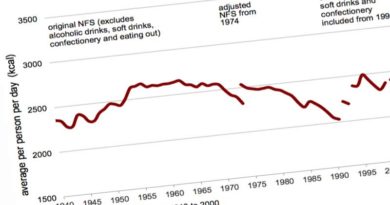
Hi Amanda – great story – I know the numbers well. We (in the UK) were eating 51.7 grams per person per day of saturated fat in 1975 and 28.1 grams in 1999. During this time obesity increased almost 10 fold from 2.7% for women to 25.8% and for men from the same starting point (2.7%) to 22.6%) – oops!
Best wishes – Zoe
I just had to comment on this, I am at the moment a health professional working within weight management services. I am advised my the teams ‘nutritional’ expert (and i use this term loosely) to advise a high carb (sugar) diet. I skate a very thin line with the advice i do give, which does go against what i am supposed to say. My argument if ever questioned is the pile of evidence i have to support my decisions as i believe my advice is in my patients bests interests. I have seen countless people in practice who have been seeing a dietitian with negative impacts on health. A lady today seeing a dietitian for 6 weeks, 5kgs heavier, poorer lipid profile, supposedly seeing a dietitian for pre diabetes and increase in blood glucose. Not surprising seeing as she has gone from high natural fat/protein to high carb…shocking!!!
Zoe, where did you get your diploma and certificate from? And why wouldn’t you recommend their course?
A gram of fat pure fat contains 9 calories – can be measured by burning.
1 lb = 453.39g (approx)
So a pound of pure fat is around 4086 calories. But body fat is not pure, it contains water and other substances. A gramme of body fat contains around 7.7 calories, so a pound of body fat = 453 x 7.7 which is around 3500. If you really wanted to check this, I’m sure a liposuction practitioner would take out a gramme or two and allow you to burn it.
Is it not dangerous to focus exclusively on obesity and not take into account the effects of different diets on the heart? After all, we mostly die of heart disease, not obesity – obesity is just one of the things which makes the heart more vulnerable. And while, strictly speaking, cholesterol is indeed simply cholesterol, what is measured in a ‘cholesterol test’ are actually the lipoproteins which transport cholesterol, of which there are ‘good’ and ‘bad’ types – ‘good’ being associated with positive health outcomes (i.e. not dying prematurely through blocked arteries).
This is very depressing, Zoe!
First we have to persuade the aithorities to look at the evidence, then they have to change the recommendations in the face of big business and then we have to wait for the schools/colleges to buy new text books!